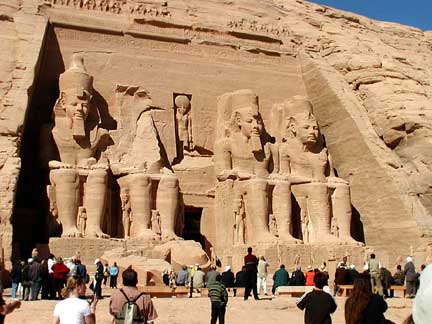
Prepare to be blown away by the magnificence of these
temples. They are undisputedly one of the world's most breathtaking monuments, and Egypt’s second most visited touristic site, the
Pyramids of Giza being on the top of the list.
The relocation of the
temples was a historic event in the 1960's. At that time, the
temples were threatened by submersion in Lake Nasser when the
High Dam was constructed. The Egyptian government with the support of UNESCO launched a world wide appeal to save these colossal landmarks. They were successfully dismantled and relocated to a spot 60 meters above the cliff where they had been initially built. The more famous of the two
temples is dedicated to Ramses II and the smaller one to his favourite wife Nefertari. They were both built by Ramses II in the 13th century BC. The gigantic façade of Ramses II temple represents four colossal seated figures of Ramses. The façade is 119 feet wide, 100 feet high, and the statues are each 67 feet high. The façade door leads to the interior of the temple is a 185 feet long man-made rock cave that leads to a series of halls and rooms.
The most remarkable feature of the temple of
Abu-Simbel is that the construction is oriented in a way that twice a year, the morning sun rays shine through the length of the inner temple cave and illuminate the statues of the four gods seated at the end of the cave.