Breaking News
Loading...
  • New Movies
  • Recent Games
  • Tech Review

VIDEOS

Tech News

Game Reviews

Recent Post

Showing posts with label Travel. Show all posts
Thursday, June 25, 2015
The Temple of Kalabsha - Egypt

The Temple of Kalabsha - Egypt

Mandulis Unveiled
The Temple of Kalabsha


Walk along an imposing stone causeway that leads from the banks of the lake to the first pylon of the temple, pass a colonnaded court and into the eight columned hypostyle hall. Note the hieroglyphs and the reliefs of Greek pharaohs paying homage to Ancient Egyptian deities. Look for Mandulis, the god clad in the vulture feathered cloak.

Built during the late Ptolemaic period and completed during the reign of the Roman emperor Augustus, the Temple of Kalabsha was dedicated to the Nubian god called Mandulis.
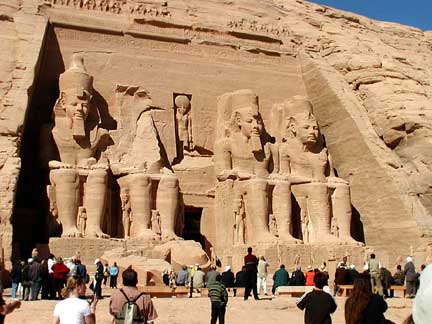
Abu-Simbel Temples Egypt

Abu-Simbel Temples Egypt

Abu Simbel Temples


Prepare to be blown away by the magnificence of these temples. They are undisputedly one of the world's most breathtaking monuments, and Egypt’s second most visited touristic site, the Pyramids of Giza being on the top of the list.
The relocation of the temples was a historic event in the 1960's.  At that time, the temples were threatened by submersion in Lake Nasser when the High Dam was constructed. The Egyptian government with the support of UNESCO launched a world wide appeal to save these colossal landmarks. They were successfully dismantled and relocated to a spot 60 meters above the cliff where they had been initially built. The more famous of the two temples is dedicated to Ramses II and the smaller one to his favourite wife Nefertari. They were both built by Ramses II in the 13th century BC. The gigantic façade of Ramses II temple represents four colossal seated figures of Ramses. The façade is 119 feet wide, 100 feet high, and the statues are each 67 feet high. The façade door leads to the interior of the temple is a 185 feet long man-made rock cave that leads to a series of halls and rooms.

The most remarkable feature of the temple of Abu-Simbel is that the construction is oriented in a way that twice a year, the morning sun rays shine through the length of the inner temple cave and illuminate the statues of the four gods seated at the end of the cave.
- See more at: http://en.egypt.travel/attraction/index/abu-simbel-temples#sthash.o9TdzYh9.dpuf
Prepare to be blown away by the magnificence of these temples. They are undisputedly one of the world's most breathtaking monuments, and Egypt’s second most visited touristic site, the Pyramids of Giza being on the top of the list.
The relocation of the temples was a historic event in the 1960's.  At that time, the temples were threatened by submersion in Lake Nasser when the High Dam was constructed. The Egyptian government with the support of UNESCO launched a world wide appeal to save these colossal landmarks. They were successfully dismantled and relocated to a spot 60 meters above the cliff where they had been initially built. The more famous of the two temples is dedicated to Ramses II and the smaller one to his favourite wife Nefertari. They were both built by Ramses II in the 13th century BC. The gigantic façade of Ramses II temple represents four colossal seated figures of Ramses. The façade is 119 feet wide, 100 feet high, and the statues are each 67 feet high. The façade door leads to the interior of the temple is a 185 feet long man-made rock cave that leads to a series of halls and rooms.

The most remarkable feature of the temple of Abu-Simbel is that the construction is oriented in a way that twice a year, the morning sun rays shine through the length of the inner temple cave and illuminate the statues of the four gods seated at the end of the cave.
- See more at: http://en.egypt.travel/attraction/index/abu-simbel-temples#sthash.o9TdzYh9.dpuf
 Prepare to be blown away by the magnificence of these temples. They are undisputedly one of the world's most breathtaking monuments, and Egypt’s second most visited touristic site, the Pyramids of Giza being on the top of the list.
The relocation of the temples was a historic event in the 1960's.  At that time, the temples were threatened by submersion in Lake Nasser when the High Dam was constructed. The Egyptian government with the support of UNESCO launched a world wide appeal to save these colossal landmarks. They were successfully dismantled and relocated to a spot 60 meters above the cliff where they had been initially built. The more famous of the two temples is dedicated to Ramses II and the smaller one to his favourite wife Nefertari. They were both built by Ramses II in the 13th century BC.

The gigantic façade of Ramses II temple represents four colossal seated figures of Ramses. The façade is 119 feet wide, 100 feet high, and the statues are each 67 feet high. The façade door leads to the interior of the temple is a 185 feet long man-made rock cave that leads to a series of halls and rooms.

The most remarkable feature of the temple of Abu-Simbel is that the construction is oriented in a way that twice a year, the morning sun rays shine through the length of the inner temple cave and illuminate the statues of the four gods seated at the end of the cave.
Prepare to be blown away by the magnificence of these temples. They are undisputedly one of the world's most breathtaking monuments, and Egypt’s second most visited touristic site, the Pyramids of Giza being on the top of the list.
The relocation of the temples was a historic event in the 1960's.  At that time, the temples were threatened by submersion in Lake Nasser when the High Dam was constructed. The Egyptian government with the support of UNESCO launched a world wide appeal to save these colossal landmarks. They were successfully dismantled and relocated to a spot 60 meters above the cliff where they had been initially built. The more famous of the two temples is dedicated to Ramses II and the smaller one to his favourite wife Nefertari. They were both built by Ramses II in the 13th century BC. The gigantic façade of Ramses II temple represents four colossal seated figures of Ramses. The façade is 119 feet wide, 100 feet high, and the statues are each 67 feet high. The façade door leads to the interior of the temple is a 185 feet long man-made rock cave that leads to a series of halls and rooms.

The most remarkable feature of the temple of Abu-Simbel is that the construction is oriented in a way that twice a year, the morning sun rays shine through the length of the inner temple cave and illuminate the statues of the four gods seated at the end of the cave.
- See more at: http://en.egypt.travel/attraction/index/abu-simbel-temples#sthash.o9TdzYh9.dpuf
Prepare to be blown away by the magnificence of these temples. They are undisputedly one of the world's most breathtaking monuments, and Egypt’s second most visited touristic site, the Pyramids of Giza being on the top of the list.
The relocation of the temples was a historic event in the 1960's.  At that time, the temples were threatened by submersion in Lake Nasser when the High Dam was constructed. The Egyptian government with the support of UNESCO launched a world wide appeal to save these colossal landmarks. They were successfully dismantled and relocated to a spot 60 meters above the cliff where they had been initially built. The more famous of the two temples is dedicated to Ramses II and the smaller one to his favourite wife Nefertari. They were both built by Ramses II in the 13th century BC. The gigantic façade of Ramses II temple represents four colossal seated figures of Ramses. The façade is 119 feet wide, 100 feet high, and the statues are each 67 feet high. The façade door leads to the interior of the temple is a 185 feet long man-made rock cave that leads to a series of halls and rooms.

The most remarkable feature of the temple of Abu-Simbel is that the construction is oriented in a way that twice a year, the morning sun rays shine through the length of the inner temple cave and illuminate the statues of the four gods seated at the end of the cave.
- See more at: http://en.egypt.travel/attraction/index/abu-simbel-temples#sthash.o9TdzYh9.dpuf
Prepare to be blown away by the magnificence of these temples. They are undisputedly one of the world's most breathtaking monuments, and Egypt’s second most visited touristic site, the Pyramids of Giza being on the top of the list.
The relocation of the temples was a historic event in the 1960's.  At that time, the temples were threatened by submersion in Lake Nasser when the High Dam was constructed. The Egyptian government with the support of UNESCO launched a world wide appeal to save these colossal landmarks. They were successfully dismantled and relocated to a spot 60 meters above the cliff where they had been initially built. The more famous of the two temples is dedicated to Ramses II and the smaller one to his favourite wife Nefertari. They were both built by Ramses II in the 13th century BC. The gigantic façade of Ramses II temple represents four colossal seated figures of Ramses. The façade is 119 feet wide, 100 feet high, and the statues are each 67 feet high. The façade door leads to the interior of the temple is a 185 feet long man-made rock cave that leads to a series of halls and rooms.

The most remarkable feature of the temple of Abu-Simbel is that the construction is oriented in a way that twice a year, the morning sun rays shine through the length of the inner temple cave and illuminate the statues of the four gods seated at the end of the cave.
- See more at: http://en.egypt.travel/attraction/index/abu-simbel-temples#sthash.o9TdzYh9.dpuf
Prepare to be blown away by the magnificence of these temples. They are undisputedly one of the world's most breathtaking monuments, and Egypt’s second most visited touristic site, the Pyramids of Giza being on the top of the list.
The relocation of the temples was a historic event in the 1960's.  At that time, the temples were threatened by submersion in Lake Nasser when the High Dam was constructed. The Egyptian government with the support of UNESCO launched a world wide appeal to save these colossal landmarks. They were successfully dismantled and relocated to a spot 60 meters above the cliff where they had been initially built. The more famous of the two temples is dedicated to Ramses II and the smaller one to his favourite wife Nefertari. They were both built by Ramses II in the 13th century BC. The gigantic façade of Ramses II temple represents four colossal seated figures of Ramses. The façade is 119 feet wide, 100 feet high, and the statues are each 67 feet high. The façade door leads to the interior of the temple is a 185 feet long man-made rock cave that leads to a series of halls and rooms.

The most remarkable feature of the temple of Abu-Simbel is that the construction is oriented in a way that twice a year, the morning sun rays shine through the length of the inner temple cave and illuminate the statues of the four gods seated at the end of the cave.
- See more at: http://en.egypt.travel/attraction/index/abu-simbel-temples#sthash.o9TdzYh9.dpuf
Abu-Simbel Temples
Abu-Simbel Temples
Thursday, June 18, 2015
Copyright © 2012 bpressv1.6 All Right Reserved
Designed by CBTblogger